List growth
A pop-up that gives people a reason to join, and an insert card that turns Amazon buyers into subscribers.


Case study · Phantum
A lifecycle flow build for a French gaming gear brand: five automated flows, plus a pop-up quiz and an Amazon insert card to feed them. Strategy to finished flows in 9 days.
The short version
Phantum hired Revnue in November 2025 to build its lifecycle flows, plus the sign-up capture to feed them. This is what we built.
Revnue project files and strategy doc, 2025-11-04 to 2025-11-13
The brand
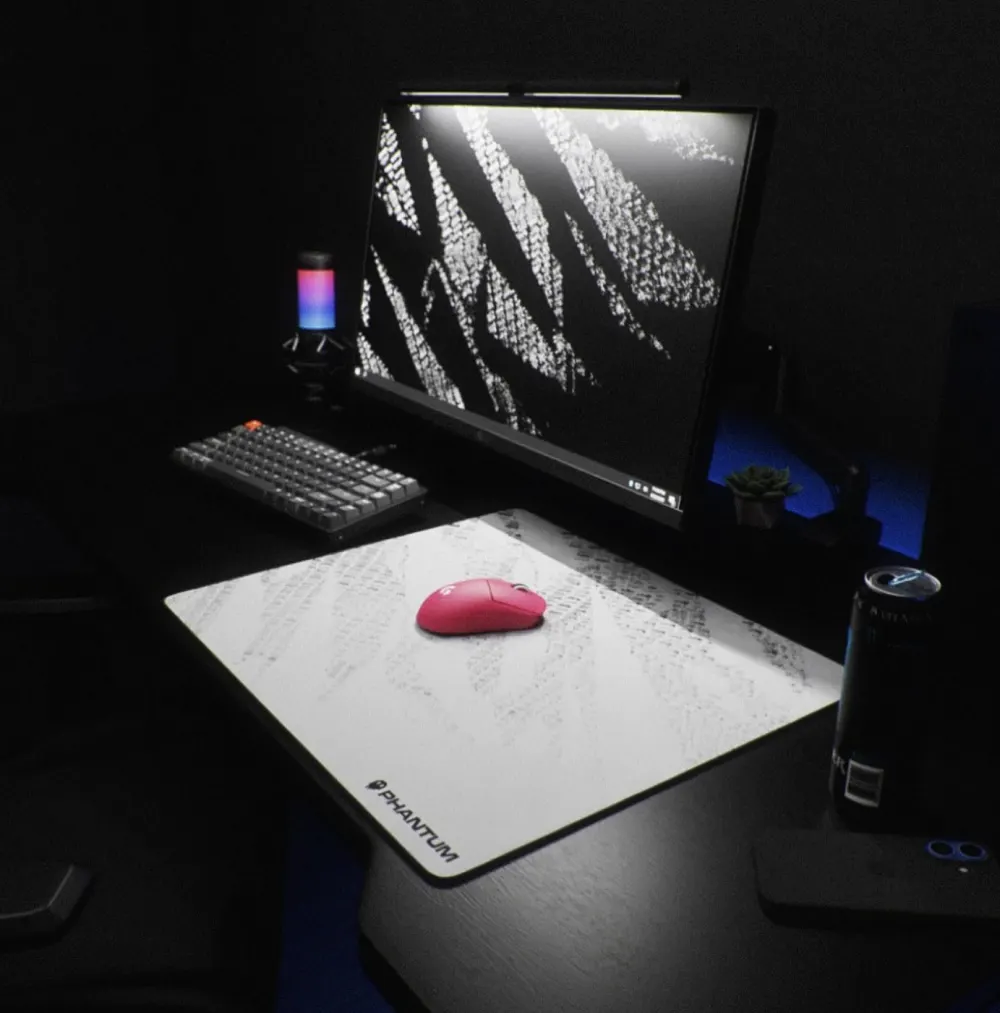
Phantum is a French brand making high-performance gaming mousepads: cloth and micro-fiber surfaces in clean, minimal designs. Its buyers are gamers, designers and content creators who treat their desk as part of who they are.
Revnue strategy doc and Phantum emails, November 2025
Where we started
Most orders ran through Amazon and resellers. Phantum never saw those buyers’ emails, so it could not sell to them again.
No complete set of flows: nothing reliable to welcome subscribers, recover carts or follow up after an order.
The subscribers Phantum did have never heard from the brand.
The only way onto the list was an exit pop-up with a 10% code. Nothing gave people a reason to join.
The plan
The strategy came first, on November 5. Then the build: five flows, ten emails, a pop-up quiz and an insert card, with revisions and handover by November 13.
A pop-up that gives people a reason to join, and an insert card that turns Amazon buyers into subscribers.
Welcome, abandoned cart, browse abandonment, post-purchase and winback: the emails that sell while nobody is working.
Start with one a week and build to three or four: setup of the month, product stories, creator features, launches.
Tag every subscriber as gamer, designer or creator, and split by new, first-time, repeat and lapsed buyers.
Revnue strategy doc (2025-11-05) and project timeline
Capture 1 · The pop-up
The old pop-up fired on exit and offered a code. The new one asks a question first: what matters most in your setup? The answer tags each subscriber as a type of player, so the emails that follow can speak to it. Then it asks for the email, for 10% off.
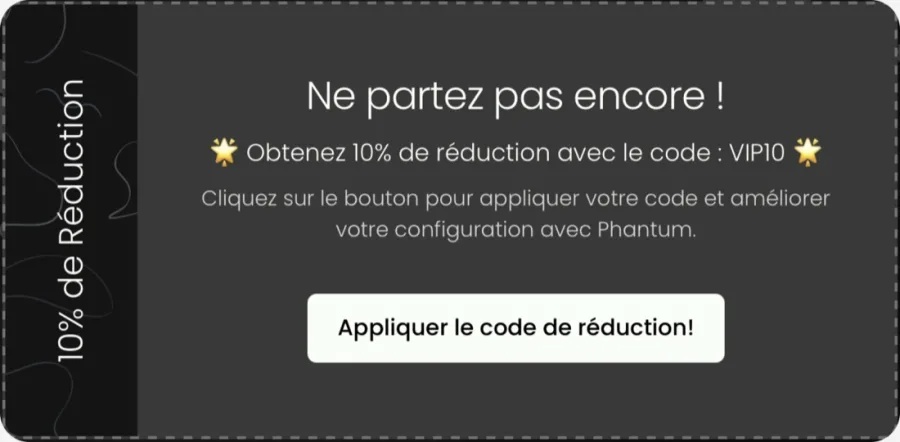
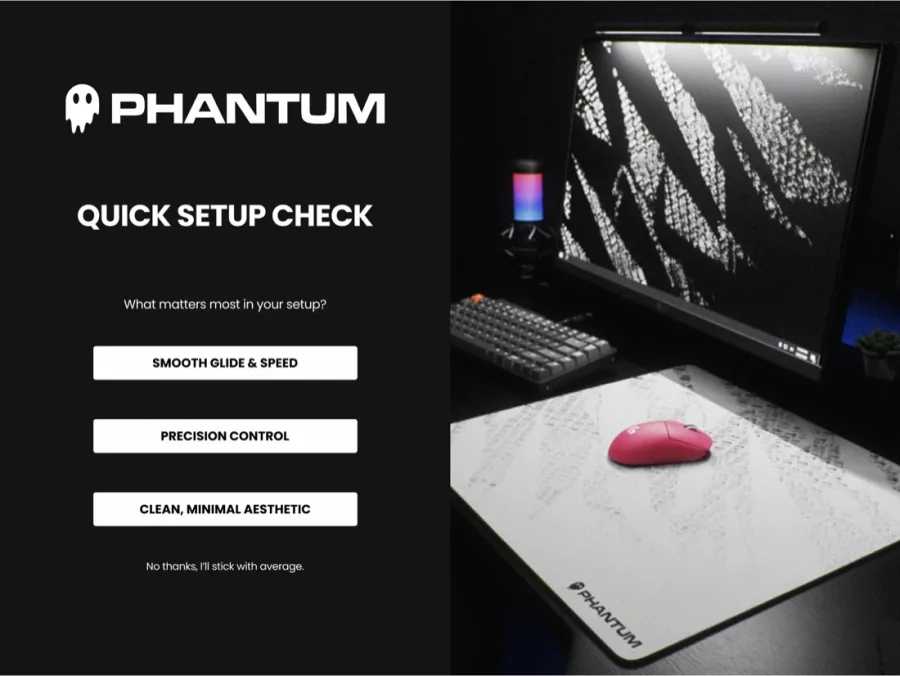
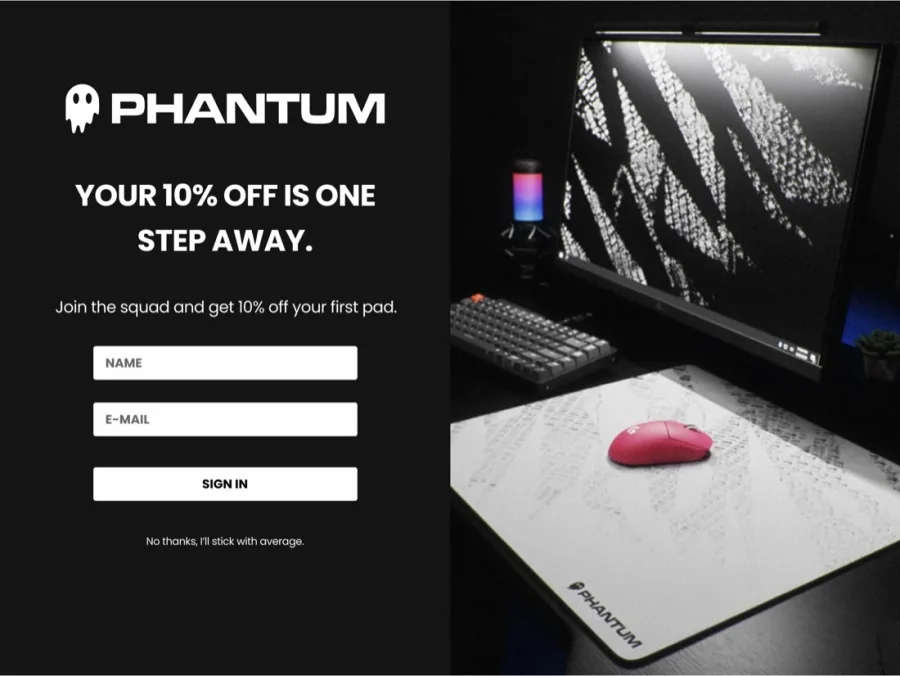
Phantum Flows Figma file, November 2025. Before: the pop-up Phantum was running.
Capture 2 · The insert card
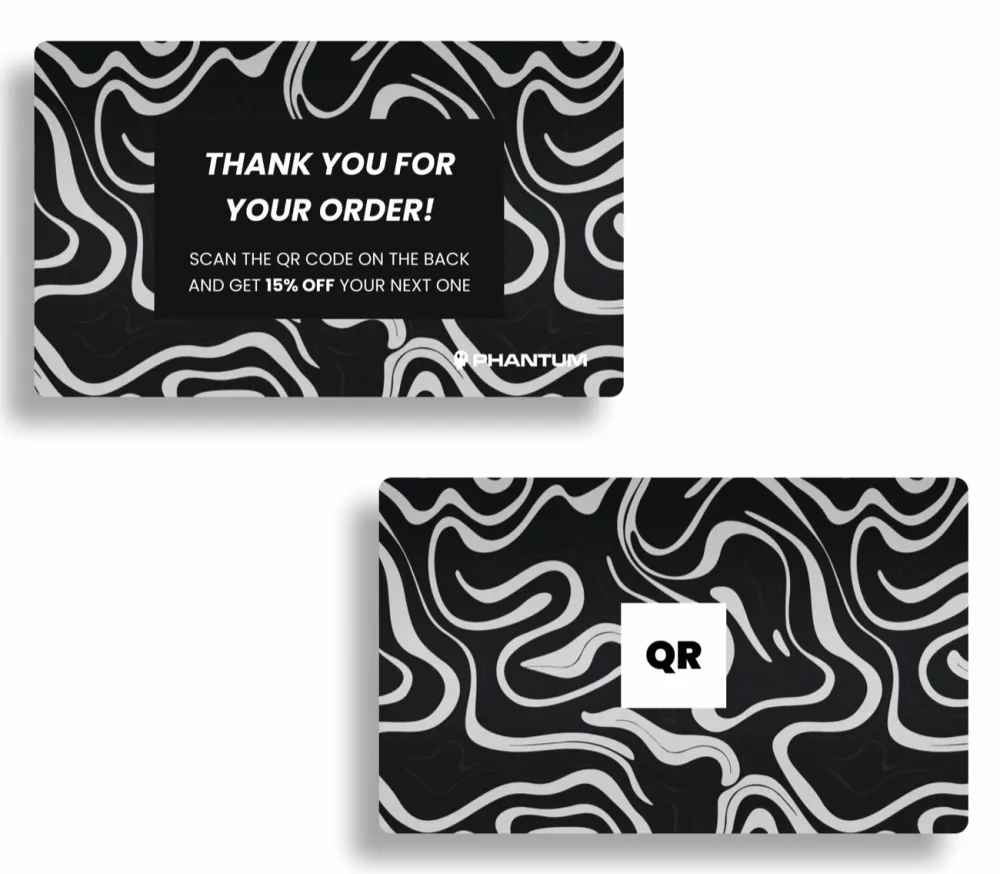
Phantum could not get emails from Amazon or reseller orders. A card in the package could. It ships in every order, third-party fulfillment included, and sends the buyer to a Phantum sign-up page for 15% off their next order, bought direct.
From Amazon, a reseller or Phantum’s own store.
“Thank you for your order” on the front, a QR code on the back.
Brand story, sign-up, and the code for the next order.
Welcome and post-purchase emails, to a customer Phantum now owns.
Revnue strategy doc and insert card design, November 2025
The flow build
Every automation in the plan, built end to end, from the trigger to the last email, plus a template for weekly campaigns. All in Phantum’s look: dark, quiet, product first.
Phantum Flows Figma file, November 2025
Inside the flows
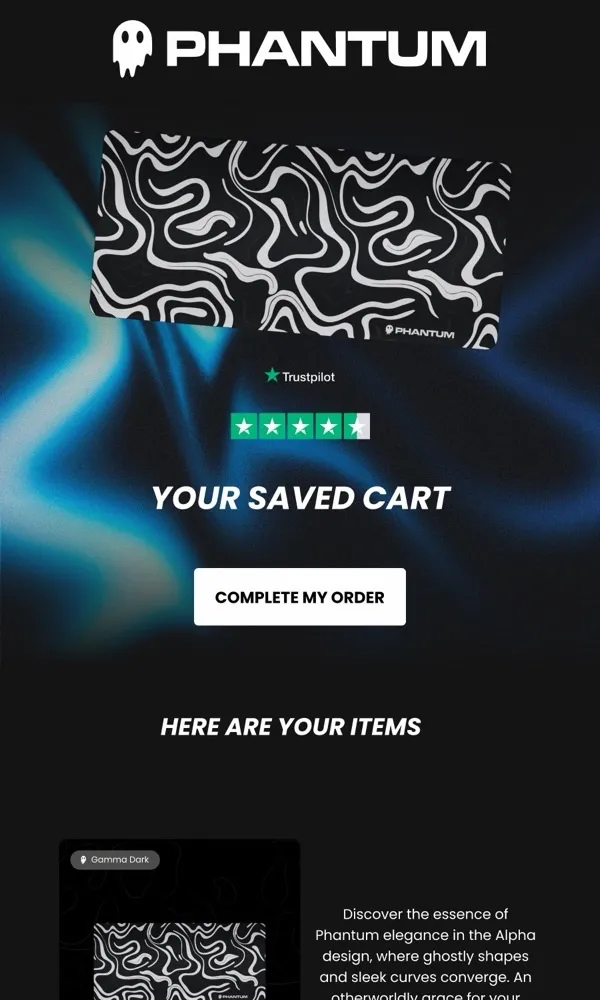

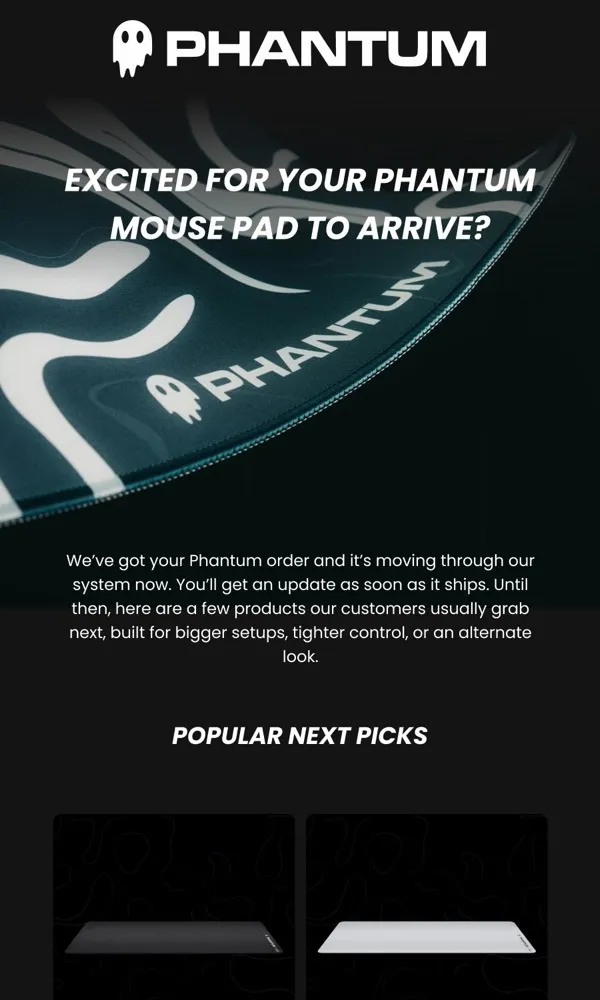
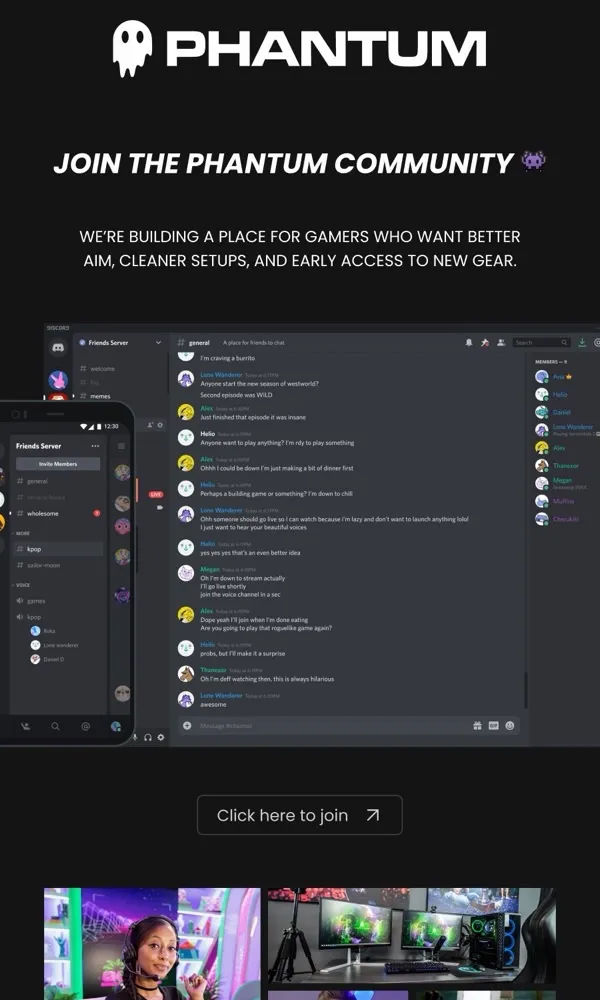
How we wrote it
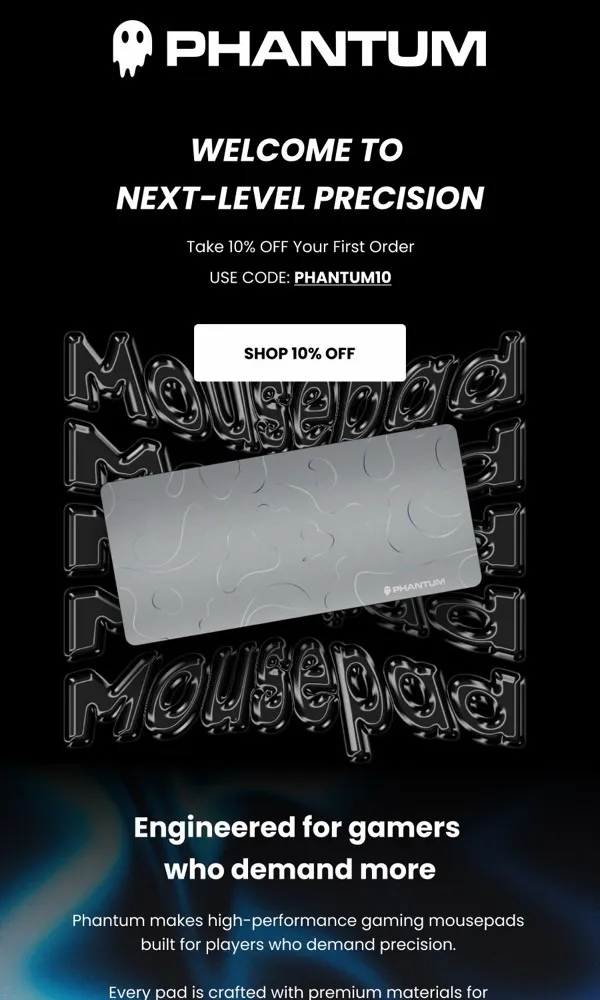
From the browse abandonment email.
Setup, glide, aim. Gamers do not shop for a “high-quality mousepad”, so the emails never say it.
Real Trustpilot reviews, kept in French as written, in the welcome, cart and browse emails.
Dark layouts, one button per screen, no shouting. “No loud logos. No gimmicks. Just pure performance.”
Phantum Flows Figma file, November 2025

Up close · The abandoned cart flow
Every email shows the exact pad the shopper left behind, pulled in automatically. What changes is the reason to come back.
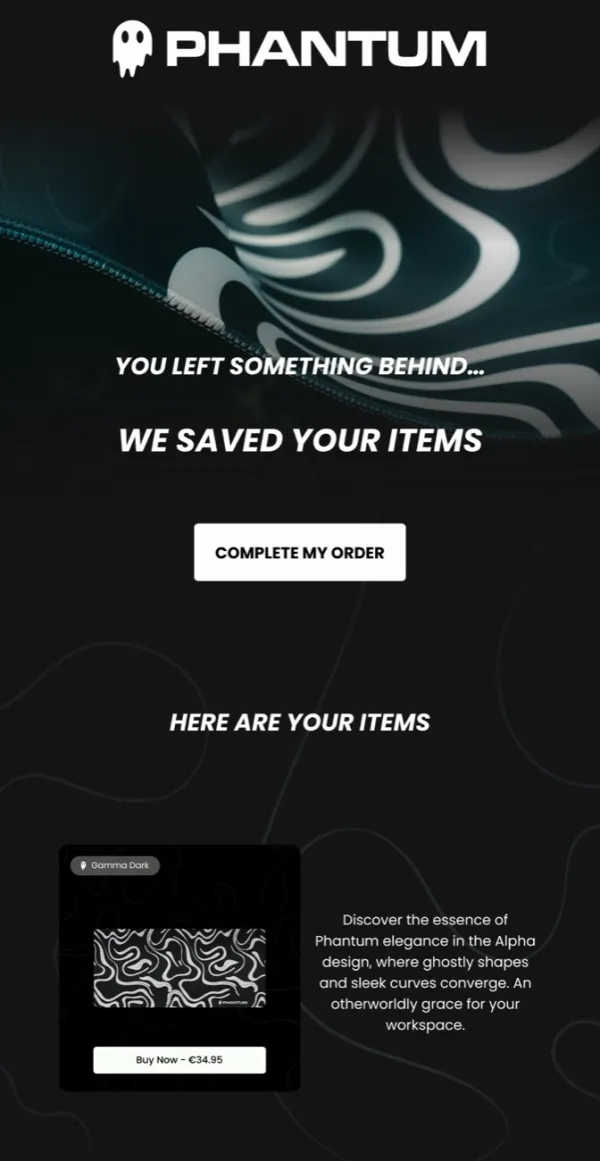
“You left something behind.” The saved items and one button back to checkout.
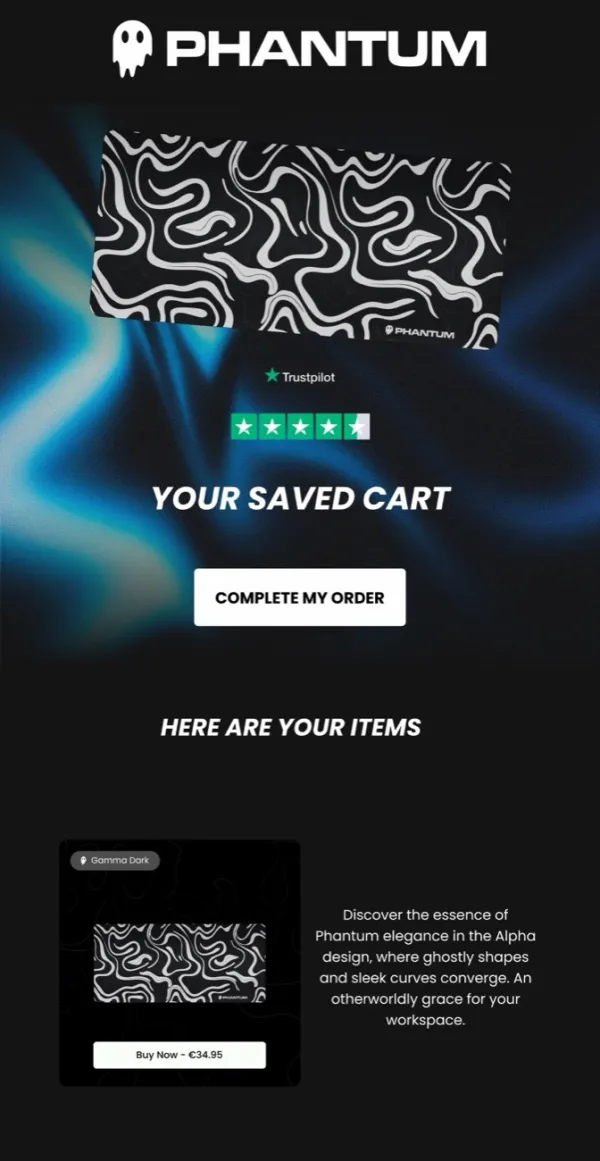
Leads with the Trustpilot rating, then reviews from real buyers.
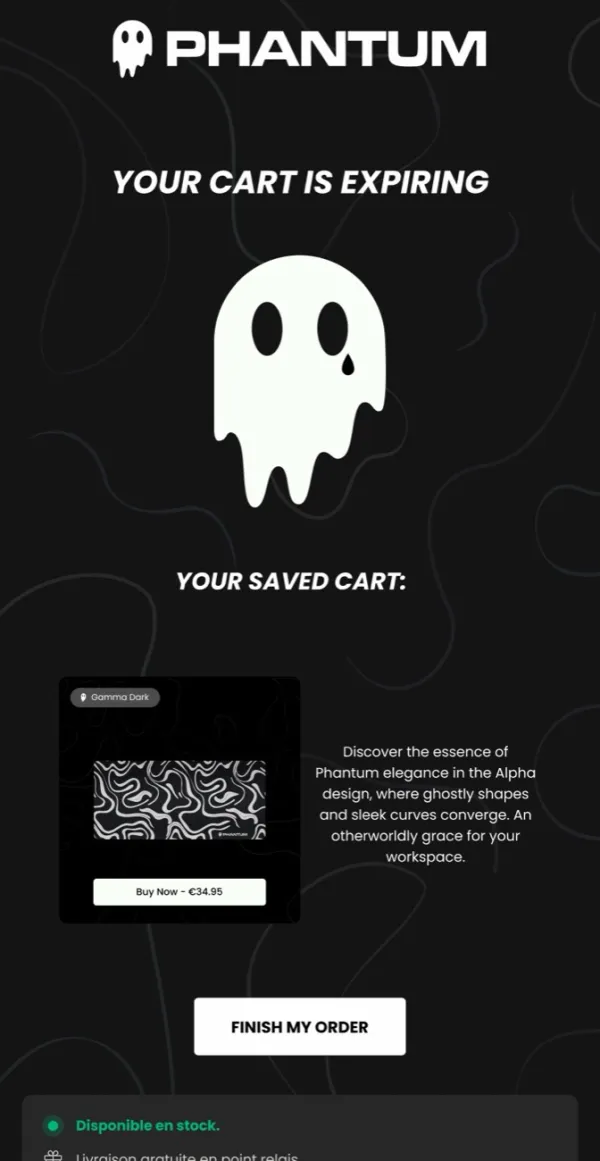
“Your cart is expiring.” Stock status, free pickup-point delivery, 30-day returns, and four pads they might like instead.
Phantum Flows Figma file, November 2025
From the client
“Amazing job from Revnue, I recommend 100%”

Take it with you
14 slides you can forward to your team: the plan, the flows and every email.